
NIJ 0101.06 vs. NIJ 0101.07
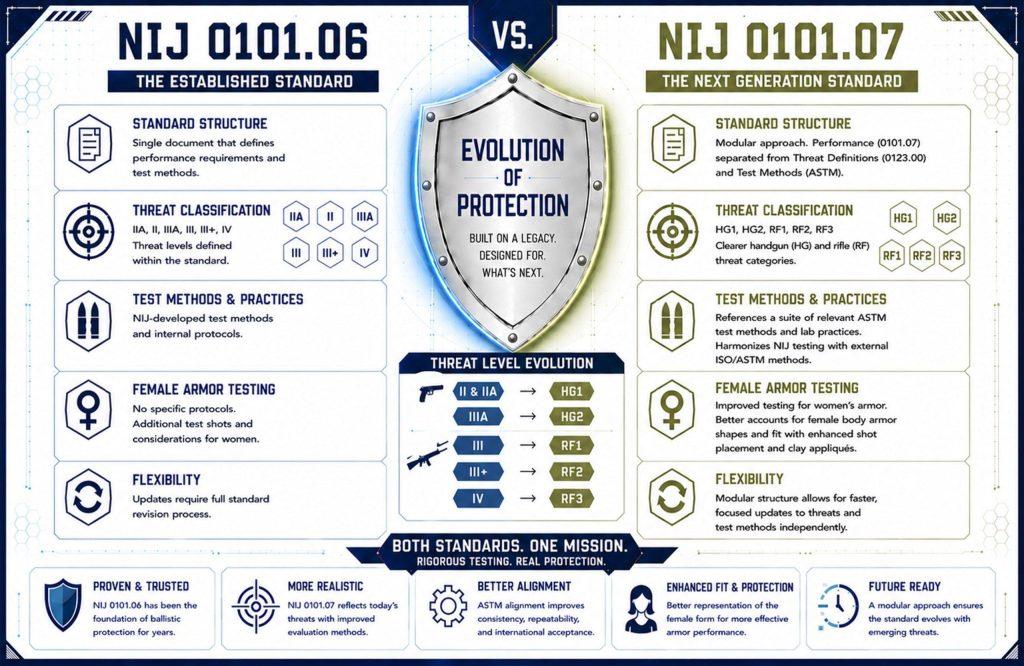
Understanding NIJ 0101.06 vs. NIJ 0101.07 Body Armor Standards
Body armor standards continue to evolve alongside ballistic threats, armor technology, and testing methodologies. NIJ Standard 0101.07 represents the next generation of ballistic-resistant body armor testing, building upon the foundation established by NIJ Standard 0101.06.
The updated standard introduces changes to threat classifications, standard structure, testing methodologies, female armor evaluation, and the flexibility to address future threats. Understanding these differences can help agencies and procurement professionals make informed decisions as NIJ 0101.07-certified armor enters the market.
Key Differences Between NIJ 0101.06 and NIJ 0101.07
While both standards establish rigorous requirements for ballistic-resistant body armor, NIJ 0101.07 introduces several significant changes to how armor is classified, tested, and evaluated.
1. Standard Structure
-
- NIJ 0101.06 uses a single standard that defines both ballistic performance requirements and testing methods.
- NIJ 0101.07 introduces a more modular structure. Ballistic performance requirements are defined by NIJ Standard 0101.07, while threat definitions and testing methodologies are addressed through supporting standards and ASTM test methods.
This structure allows individual components of the testing framework to be updated more efficiently as threats and testing technologies evolve.
2. New Ballistic Threat Classifications
One of the most visible differences between NIJ 0101.06 and NIJ 0101.07 is the transition from traditional Roman numeral threat levels to HG (Handgun) and RF (Rifle) classifications.
The classifications generally transition as follows:
-
- Level II and IIA = HG1
- Level IIIA = HG2
- Level III = RF1
- Level III+ = RF2
- Level IV = RF3
Explore Slate Solutions’ NIJ 0101.06 and NIJ 0101.07 hard armor plate solutions to compare available protection levels and configurations.
3. Updated Test Methods and Practices
NIJ 0101.07 incorporates relevant ASTM test methods and laboratory practices into the body armor evaluation process.
The updated framework is designed to improve consistency and repeatability across ballistic testing while aligning NIJ testing with established external methodologies.
For agencies evaluating armor, the change provides a more standardized framework for assessing ballistic performance.
4. Enhanced Female Armor Testing
NIJ 0101.07 introduces improvements to the evaluation of armor designed for the female form.
The updated testing better accounts for shaped armor designs through enhanced shot placement and testing considerations. This allows armor with more complex contours and construction to be evaluated in a way that better represents its intended design and fit.
The result is a more comprehensive approach to evaluating ballistic protection across different body armor configurations.
5. Greater Flexibility for Future Updates
Under NIJ 0101.06, changes to testing requirements typically required revision of the broader standard.
The modular structure introduced with NIJ 0101.07 provides greater flexibility. Threat definitions and testing methodologies can evolve independently, allowing the testing framework to respond more efficiently to emerging threats and advances in armor technology.
This helps make the new standard more adaptable for the future.
What Does NIJ 0101.07 Mean for Agencies and Armor Buyers?
The transition to NIJ 0101.07 does not change the fundamental objective of body armor standards: providing reliable ballistic protection through rigorous, standardized testing.
Instead, the new standard modernizes how that performance is classified and evaluated.
When comparing armor, agencies should consider the applicable NIJ standard, certified threat level, operational requirements, armor configuration, weight, fit, and intended use rather than comparing threat-level terminology alone. Agencies can also review Slate Solutions’ NIJ 0101.07 armor solutions for products developed and certified under the updated standard.
Both Standards. One Mission.
NIJ 0101.06 established a trusted foundation for ballistic body armor testing. NIJ 0101.07 builds upon that foundation with updated threat classifications, revised testing methodologies, enhanced evaluation of female armor, and a more flexible standard structure.
At Slate Solutions, our focus remains the same: developing high-performing armor solutions designed to meet the protection requirements of the professionals who rely on them.
FAQs
- What is the main difference between NIJ 0101.06 and NIJ 0101.07?
NIJ 0101.07 introduces updated threat classifications, a modular standard structure, revised testing methodologies, enhanced female armor testing, and greater flexibility for future updates. - What replaced NIJ Level IIIA under NIJ 0101.07?
NIJ Level IIIA transitions to the HG2 handgun threat classification under the updated NIJ framework. - What do HG and RF mean in NIJ 0101.07?
HG identifies handgun threat classifications, while RF identifies rifle threat classifications. - Is NIJ 0101.06 body armor still relevant?
Yes. NIJ 0101.06 and NIJ 0101.07 represent different generations of NIJ ballistic-resistant body armor standards. Agencies should evaluate armor based on its certification, threat protection, operational requirements, and applicable procurement policies. Slate Solutions continues to offer NIJ 0101.06 armor solutions alongside products certified to the updated NIJ 0101.07 standard. - Why did NIJ change the body armor standard?
The updated framework modernizes ballistic threat classifications and testing methodologies while creating a more flexible structure that can adapt as threats, armor technologies, and testing practices evolve.